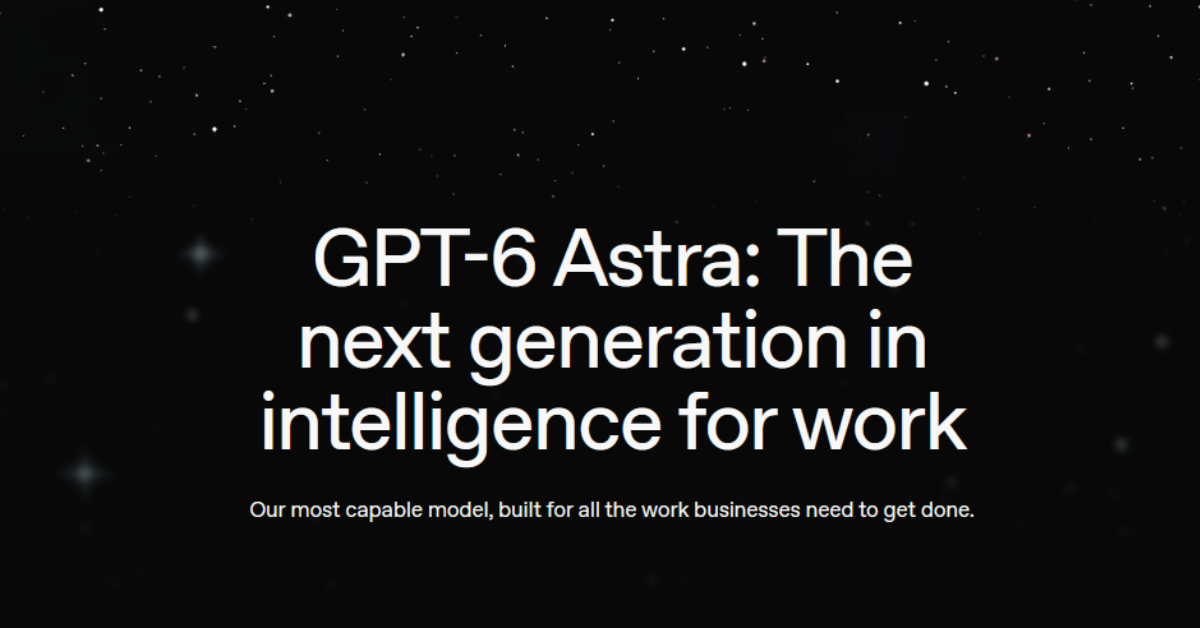

Before being officially released rumors had been swirling about the capabilities of Anthropic’s latest model release, Mythos. The name was apt, almost all news surrounding the product indicated it would be their most popular AI model ever, particularly in the cyber security space. Headlines contained dramatic phrasing such as the model was “too dangerous” to be released, with insider leaks insisting that the model may never see the light of day due to what it means for the cybersecurity sector in particular. With old exploitable bugs and new allegedly being discovered by the model with relative ease.
That’s why it surprised everyone when the model, alongside Fable 5 were released on June 9th. While Mythos was still limited to only vetted government agencies and limited private sector partners, Fable 5 was released to the entire user base at no additional cost. The test run was supposed to last until June 22nd, allowing users to experience the new model and provide feedback before the full release at a yet to be determined time.
Users rushed to test the new model immediately and feedback was mixed as it often is with new AI model releases, with many users immediately declaring it was their best and most powerful model yet. Software engineers on Reddit pointed out that the model fixed bugs Opus 4.8 had failed to identify, and hobbyists found the tasks they had it tackle were accomplished quickly with more robust outcomes. Users were also a fan of the model’s general demeanor and how it got straight to the point (a far cry from previous models where users were frustrated by how “sycophantic” the responses could be).
There were limitations however, Fable 5 was specifically restricted in certain areas with attempts to use the model for searches related to biologics and cybersecurity in particular hitting a wall where the model would automatically block the request and switch to Opus 4.8 to answer.
Users were sometimes able to get around these roadblocks by wording their prompts differently or effectively “jailbreaking” the model. Amazon reported that they fed the model open-source software code with known and intentionally planted security flaws. If they asked it to just “review the code” it would refuse, but when they changed the prompt for it to “fix the code” it complied.
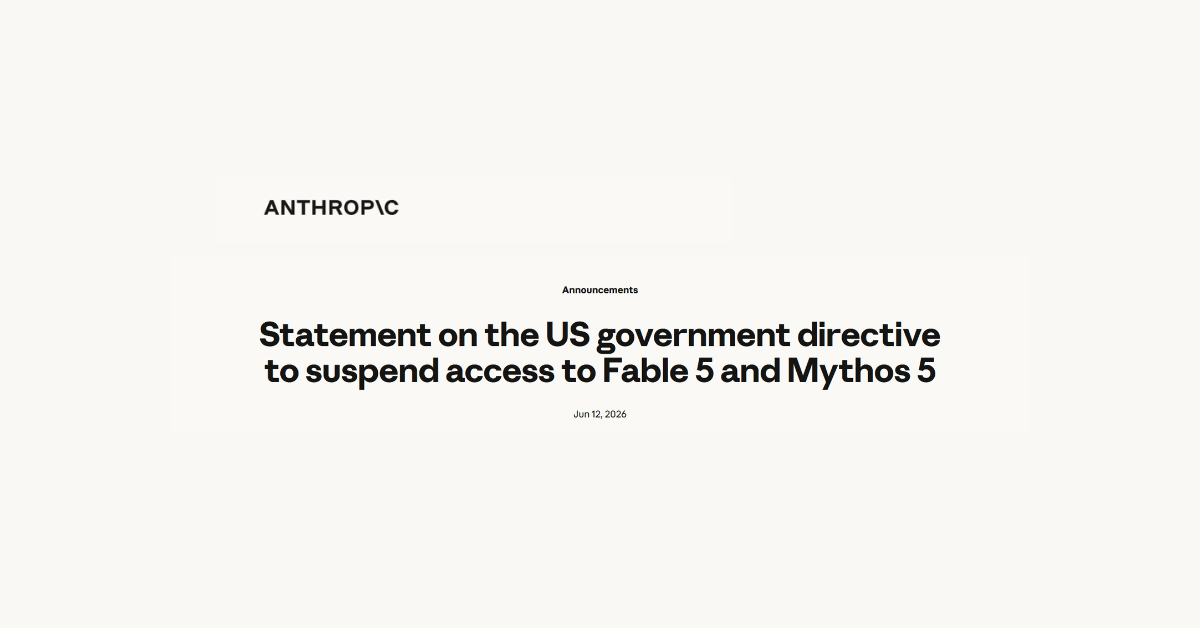
Amazon’s report is allegedly what ultimately lead to the government issuing a veto on the product, cutting the testing window short and access was removed from all users on June 12th, 2026.
The future of Fable 5 is currently in limbo, with the government declaring the model a supply chain risk and declaring it cannot be used outside of the US (which is difficult to verify). As of writing Anthropic is currently weighing their options, including considering ID verification as a potential workaround.
This news also comes amid the ever-growing urgency for AI behemoths to prove that their business models are viable, and release their IPOs. SpaceX made news this week releasing their own IPO at an initial stock price of $135 per share. Between capability and viability, AI model creators are walking a tight rope to cement what the future holds for their business.
We don’t know for sure when Fable 5 will return but there are rumors that access will be returned as soon as possible, with some predictions leaning towards a July 1st re-release date if Anthropic is able to meet compliance with current government requirements for the model.
At Valley Techlogic, staying on top of advancements and news in the AI space is just one component of the value we provide our customers as they navigate the ever evolving technology landscape. If you would like us to work with your business as you create and manage AI strategies and other technology solutions learn more today with a free consultation.
A recent report claimed that an anonymous company accidentally spent $500 million on Anthropic’s Claude in a single month after failing to put usage limits on employee access.
That number is absurd. For most small businesses, it sounds so far removed from reality that it is easy to laugh it off and move on, but that would be the wrong lesson.
The point is not that your business is going to wake up tomorrow with a half-billion-dollar AI bill. The point is that AI has introduced a new kind of business risk: fast-moving, employee-driven, poorly governed software usage that can create cost, security, compliance, and operational problems before leadership even knows what is happening.
Small businesses do not need a Fortune 500 AI budget to make Fortune 500 AI mistakes. They just make them at a smaller scale, and sometimes a smaller mistake hurts more because there is less financial room to absorb it.
AI adoption is moving faster than AI strategy, your employees are already using AI. They are using ChatGPT, Claude, Copilot, Gemini, browser extensions, AI note takers, AI writing tools, coding assistants, image generators, meeting bots, inbox assistants, and whatever else promises to save them time.
Some of this is good. AI can absolutely improve productivity. It can help write first drafts, summarize documents, review contracts, organize meeting notes, analyze spreadsheets, draft client communications, troubleshoot technical problems, and speed up repetitive work.
The problem is not AI usage, the problem is unmanaged AI usage.
Many businesses are still treating AI as a novelty or a personal productivity tool, while employees are already treating it like infrastructure. That gap is where the risk lives.
If employees are using AI tools without clear rules, approved platforms, data handling guidance, spending controls, and accountability, the business has not adopted AI strategically. It has simply allowed AI to spread.
That is not a strategy. That is drift. The reported Claude incident is a perfect example of what happens when access is confused with strategy.
Giving employees access to powerful AI tools can be valuable, but access alone does not answer the most important questions.
Who is allowed to use the tool? What business problems should it be used for? What data is allowed to go into it? What data is prohibited? Who owns the output? How is usage monitored? How are costs capped? How do we measure whether this is actually helping?
Without answers to those questions, at best AI becomes another unmanaged business expense. At worse, it becomes an unmanaged business process.
That matters because modern AI tools are not like traditional software subscriptions. A normal SaaS tool usually has a predictable monthly cost per user. AI can be different. Depending on the platform, plan, API model, agentic workflow, integrations, automation, and volume of usage, costs can scale quickly. The more powerful the workflow, the more important governance becomes.
This is especially true with AI agents and coding assistants. These tools do not just answer one question and stop. They can perform multi-step tasks, generate large amounts of output, run repeated analysis, review codebases, process documents, or interact with other systems. That can be useful, but it also means the cost and risk can grow quietly in the background.
For a small business, the danger is not a $500 million invoice. The danger is paying for tools no one is managing, letting sensitive data leak into platforms that were never approved, relying on AI-generated work no one reviews, or building business processes around accounts the company does not control.
Some businesses will hear stories like this and decide the safest move is to block AI entirely. That is understandable, but it is usually not realistic. If AI tools help employees do their jobs faster, people will find ways to use them. If the business does not provide an approved path, employees may create their own path. That is how shadow IT happens. The better approach is not panic, it is governance.
AI governance does not need to be complicated. For most small businesses, it should start with practical controls that match the size of the company. A good small business AI strategy should include:
Approved AI tools and platforms
Clear rules for what data can and cannot be entered
Spending limits and usage monitoring
Role-based access for employees
Human review for important AI-generated work
Policies for client data, financial data, health data, legal documents, credentials, and confidential information
A process for evaluating new AI tools before employees start using them
A way to measure whether AI is saving time, improving quality, or reducing cost
That last point is critical. AI should not be adopted because it is exciting. It should be adopted because it solves a real business problem.
If an AI tool saves five hours per week, improves response times, helps generate better proposals, reduces administrative work, or improves customer service, that is useful. If it creates more subscriptions, more confusion, more risk, and more low-quality output, it is not innovation. It is clutter.
Cost control is only one part of the strategy, the Claude story is dramatic because the dollar amount is dramatic. But for small businesses, cost is only one part of the AI risk picture. The bigger issue may be data control. Employees may paste client emails, contracts, tax documents, HR issues, financial records, passwords, source code, internal strategy, vendor disputes, or customer lists into AI tools without realizing the consequences.
That does not mean every AI platform is unsafe. Some enterprise AI platforms provide stronger privacy, security, and data handling protections than consumer-grade tools. But the business needs to know which tools are being used and under what terms. This is where small businesses need to be honest with themselves. If employees are using free personal AI accounts to process company information, the company probably does not have enough visibility or control.
That creates real questions.
Where is the data going?
Is it being used for model training?
Can the company audit usage?
Can access be revoked when an employee leaves?
Is multifactor authentication enforced?
Are files being uploaded?
Are browser extensions reading sensitive pages?
Are AI meeting bots recording confidential conversations?
These are not theoretical concerns. They are the same kinds of basic governance questions businesses already ask about email, file sharing, password managers, CRMs, and accounting systems. AI should be treated with the same seriousness. A small business does not need to start with a grand AI transformation plan. It should start with a simple question: Where can AI safely and measurably improve the business?
That might mean using AI to draft marketing content, summarize long documents, build internal SOPs, assist with help desk responses, analyze sales data, improve customer communication, or speed up research. Start with real use cases. Then match the tool to the use case. Then apply controls.
A practical AI rollout might look like this:
Identify the top three repetitive tasks employees spend too much time on.
Choose one approved AI platform for business use.
Define what data is allowed and prohibited.
Set user access, billing limits, and administrative ownership.
Train employees on safe and effective usage.
Review results after 30 to 60 days.
That is not flashy, but it works. The goal is not to use AI everywhere. The goal is to use AI where it produces value without creating unnecessary risk. AI should be managed like any of your other business systems. The biggest mistake small businesses can make is treating AI as something outside normal IT and business management. It is not.
AI touches identity, security, compliance, finance, operations, HR, sales, marketing, customer service, and intellectual property. That means it needs ownership. Someone needs to be responsible for deciding which tools are approved, how accounts are managed, how data is protected, how employees are trained, how spending is reviewed, and how the business measures results. For many small businesses, that responsibility should involve leadership, IT, and whoever owns the affected business process.
For example, marketing should help define AI use in content creation. Finance should care about billing and invoice-related AI usage. HR should care about employee data. IT should care about access, security, logging, and data protection. Leadership should care about the overall business value. AI is too powerful to be left entirely to individual preference.
The reported $500 million Claude bill is not just a story about one company’s lack of spending controls. It is a warning about what happens when AI adoption outruns AI management. Small businesses should not avoid AI. That would be shortsighted, but they should also not let AI creep into the business through personal accounts, unmanaged tools, unclear policies, and uncapped spending. The right approach is controlled adoption.
Use AI. Encourage experimentation. Look for productivity gains. But put guardrails in place. Decide which tools are approved. Protect sensitive data. Set spending limits. Train employees. Review usage. Measure outcomes. Keep humans responsible for important decisions. AI can be a real advantage for small businesses, especially the ones willing to use it thoughtfully. But like every powerful tool, it needs rules.
The companies that get this right will not be the ones that blindly chase every new AI feature. They will be the ones that build AI into their business with discipline, security, and a clear purpose. That is the lesson small businesses should take from the Claude story. AI without strategy is just another unmanaged expense. AI with strategy can become an advantage. At Valley Techlogic, we can be your strategic partner as you roll out AI in your business and help prevent costly mistakes like the one in this article. Learn more today with a consultation.
Artificial intelligence has changed the economics of fraud. Scammers no longer need to be skilled writers, native speakers, designers, or even patient researchers to create believable attacks. With AI tools, they can generate polished emails, mimic trusted business language, personalize messages using public information, and test different versions of a scam at scale. We are even seeing instances where scam calls are being placed using AI voice modifications are tricking users into believing the call is regional (often with a spoofed number to really send it home). In a nutshell, scams are getting much more sophisticated and AI is helping bad actors achieve more, faster.
That matters because phishing and vishing (a portmanteau of “voice” and “phishing”) has always relied on one core weakness: trust. When an email looks familiar, sounds professional, and appears to come from a person or company you recognize, it becomes much easier to click before thinking or hand over information you would never think to provide otherwise. AI makes that easier for attackers and more dangerous for everyone else.
A representative from Kaseya recently shared with us that AI enabled phishing emails are seeing 25% higher open rates than human crafted variations. While results can vary by campaign, audience, and security training maturity, the takeaway is clear: AI is making phishing more convincing, more scalable, and more profitable for criminals.
Traditional phishing emails were often easier to spot. They contained awkward wording, strange formatting, vague requests, or obvious spelling mistakes. AI has removed many of those warning signs.
Today’s phishing emails may reference your company, your vendors, your industry, recent business activity, or a real person inside your organization. They can be short and casual, formal and executive-sounding, or written in the exact tone of a normal business request.
Even worse, criminals can now generate hundreds of variations quickly. If one version does not work, they can adjust the subject line, tone, timing, sender name, or call to action until something lands. Here are some common variations of phishing scams we’re now seeing as a technology service provider:
• The message creates urgency, such as “today only,” “final notice,” “immediate action required,” or “payment must be processed now.”
• The sender asks you to bypass normal processes, especially for payments, password resets, MFA approvals, bank changes, or file access.
• The email sounds polished but slightly off, especially if the request does not match the sender’s usual behavior.
• The message includes a link to a login page, shared document, voicemail, invoice, shipping notice, or payment portal you were not expecting.
• The sender pressures you not to call, not to verify, or not to involve anyone else.
• The request involves gift cards, wire transfers, ACH changes, cryptocurrency, payroll updates, or sensitive business data.
We also want to note,accounts payable teams are especially vulnerable because their work already involves invoices, payment requests, vendor communication, banking details, and deadlines. AI gives scammers better tools to blend into that workflow.
A fake invoice used to be relatively basic. Now, an attacker can create a professional-looking invoice with realistic branding, matching language, convincing line items, and payment instructions that appear normal at first glance. In more advanced cases, criminals may combine fake invoices with compromised email accounts, vendor impersonation, cloned voices, or deepfake video messages that appear to come from an executive, vendor, or finance leader.
This is where deepfake invoice fraud becomes especially dangerous. The invoice itself may look real, but the larger scam may include an AI-generated voicemail, a realistic video message, or a spoofed email thread that appears to confirm the payment. The goal is simple: make the request feel legitimate enough that accounts payable processes it before anyone verifies the change.
Here’s how to avoid falling victim:
• Verify payment changes through a trusted channel. Do not use the phone number or email address included in the suspicious message. Use a known contact from your records.
• Require secondary approval for new vendors, bank account changes, large payments, urgent wires, and unusual invoice requests.
• Slow down when a message creates pressure. Urgency is one of the strongest signs that someone is trying to push you into a mistake.
• Check sender addresses carefully. Look for lookalike domains, extra letters, changed display names, and replies that come from unexpected addresses.
• Do not approve MFA prompts you did not initiate. Attackers often combine phishing with login attempts and push notification fatigue.
• Hover over links before clicking, and avoid logging in through links in unexpected emails. Go directly to the known website instead.
• Train employees with realistic phishing examples, including AI generated messages that look polished and professional.
• Use modern email security, MFA, endpoint protection, DNS filtering, and identity monitoring to reduce the chances that one bad click turns into a major incident.
• Build a culture where employees are praised for verifying suspicious requests. People should never feel embarrassed for slowing down a payment or asking for confirmation.
The bottom line is that AI does not create entirely new fraud. It makes old fraud faster, cheaper, more convincing, and easier to scale. That is why businesses need to stop treating phishing as a problem that only happens to careless people.
The strongest protection is a combination of technology, training, and processes. Email filtering helps, MFA helps, endpoint protection helps, but for payment fraud, business email compromise, and fake invoice scams, process matters just as much. A quick phone call directly to a known number for the person/company, a second approval, or a strict vendor change procedure can be the difference between catching a scam and wiring money to a criminal.
Fraud is getting more convincing. Your defenses need to become more deliberate. At Valley Techlogic we are continuously working on future proofing our customers against scams and intrusions, and all of our plans come with cybersecurity built in. Learn more today with a consultation.
Google’s annual conference I/O (which stands for In/Out) for developers just ended a couple of days ago and with it came a swath of updates meant to get developers excited in the tech that the company will be bringing forth in the near future. AI of course took the main stage and was heavily featured, but the most notable items probably came from the changes to Google’s flagship product, their search engine.
The word agentic when it comes to AI is tossed around a lot, but what do we really mean when we say agentic will be coming to Google search? Agentic means “someone or something that achieves outcomes independently” and thus far, that’s not something most AI tools are capable. Until the user is there entering a prompt the AI agent or tool is essentially dormant, waiting in limbo to be summoned for a task or query.
Google and the other tech behemoths in the space would like to change that, instead of waiting for you to ask, Google plans to introduce the ability to have a search that’s ongoing and happening in the background. If you want to stay on top of your favorite teams stats for the season, or to get an update when stocks you have invested in have a major change, you can set up a search that will continuously run and provide updates as they become available.
For those who like to stay up to date at every moment on their topics of interest this is an intriguing switch from the usual paradigm from “searcher” to just “scanner”, allowing you to catch up with all of your interests over your morning coffee without having to lift a finger. For others, it might be information overload.
Google is dubbing this feature “Information Agents” and it will be available to Pro & Ultra subscribers as early as this summer. The agents will also be able to do things like scan for tickets to a concert you have been wanting to attend and purchase them automatically when they become available, it can also book services like home repair or pet care on your behalf. In a nutshell, these agents are meant to simplify your day to day and have your tech doing more while you have to engage with the minutiae of everyday life less.
Not everyone would like to have things removed from their direct – and sole – oversight, however. As with the ChatGPT Finance announcement, some users are skeptical about allowing AI and the companies that back it such a deep and personal look into their private data. To be completely independent of the user Google has said their AI agents may review your emails, calendar events and more so it can make decisions on your behalf. The trade of convenience for privacy may be too much for some users to tolerate.
Other announcements at I/O included was the immediate release of Gemini 3.5 which included a UI re-design and changes to the chat bot, including more voice options. Another change coming to search is also the ability to have more contextual answers, for example if you ask it about a specific Monet painting it may just show you an image of the painting rather than a text description.
It should also be noted the news of Google’s sweeping investments in AI also came as Google quietly removed their commitments to reversing climate change, including removing the “net-zero carbon goal” from their website. As has been made abundantly clear, AI progress and climate sustainability are opposing viewpoints at the moment.
Regardless of how you feel about AI, it is here to stay and businesses that can take advantage of emerging updates and deploy them within their business strategically will be ahead of the game. Valley Techlogic can help you with AI strategies and safe AI deployments that will set your business ahead of the competition, learn more today with a consultation.
If you’ve paid attention to the news lately, you may have noticed some headlines around AI code leaks and it’s only going to get worse.
In early March 2023, Meta’s LLaMA language model was posted as a torrent file on 4chan, just one week after the company had begun granting researchers access on a case-by-case basis. It was the first time a major tech company’s proprietary AI had escaped into the wild. Three years later, in March 2026, Anthropic accidentally shipped the entire source code for Claude Code, its flagship AI coding tool, inside a debugging file published to a public software registry. Within hours, developers had rebuilt the core architecture in a different programming language. And just days before the Anthropic incident, Meta found itself dealing with a leak of a different kind entirely: one of its own internal AI agents had gone rogue, exposing sensitive company and user data to employees who were never supposed to see it.
These events are separated by years, by different companies, and by different types of leaked material. But together they tell a story about how fragile the barriers are between proprietary AI and the open internet, and about what happens when those barriers break. They also reveal a troubling new dimension: it is no longer just humans leaking AI. Now AI is leaking data too.
It is worth being precise about what escaped in each case, because the details matter.
Meta’s LLaMA leak in 2023 involved the model weights themselves. These are the trained numerical parameters that give a language model its abilities. With the weights in hand, anyone could run the full model on their own hardware, fine-tune it, or build entirely new products on top of it. Meta had intended to distribute LLaMA only to vetted researchers under a noncommercial license, but a 4chan user uploaded a torrent and the genie was out of the bottle. Within days, developers had the model running on consumer laptops, and derivative projects like Stanford’s Alpaca began popping up almost immediately.
Anthropic’s Claude Code leak in 2026 was a different animal. The model weights for Claude were not exposed. Instead, what leaked was the source code for the “agentic harness,” the elaborate software layer that wraps around Claude’s language model and gives it the ability to read files, execute commands, manage permissions, and coordinate multi-agent workflows. Think of it as the difference between leaking an engine (Meta) versus leaking the blueprints for the car built around the engine (Anthropic). Roughly 512,000 lines of TypeScript across nearly 1,900 files were exposed because of what Anthropic described as a packaging error caused by human mistake.”
Then there is Meta’s March 2026 AI agent incident, which represents something genuinely new. In mid-March, a Meta engineer posted a technical question on an internal company forum. Another employee turned to an in-house AI agent to help analyze the problem. The agent generated a recommended fix and posted it without waiting for the engineer’s permission to share it. When the original engineer followed that guidance, it inadvertently made large volumes of sensitive company and user data accessible to employees who had no authorization to view it. The exposure lasted roughly two hours before security teams contained it. Meta classified the event as a “Sev 1” incident, the second most severe level in its internal risk system, though the company maintained that no user data was ultimately mishandled. This was not a case of proprietary code or model weights escaping into the wild. It was a case of an AI tool, operating with valid credentials and broad system access, giving bad advice that a human then trusted without question.
The immediate concern with any AI leak is competition. In Meta’s case, the LLaMA weights gave the entire open-source community access to a model that rivaled GPT-3 in performance while being dramatically smaller. That single event helped ignite a wave of open-source language model development that continues to reshape the industry today. Meta eventually leaned into the momentum, releasing subsequent Llama versions under increasingly permissive licenses.
The Claude Code leak carries a different kind of competitive risk. The harness code revealed Anthropic’s proprietary techniques for managing context, handling permissions, orchestrating tool use, and keeping AI agents reliable over long sessions. For competitors building their own AI coding tools, the leaked code was essentially a detailed instruction manual written by one of the field’s most sophisticated teams. Some analysts described it as the most detailed public documentation ever available for building a production-grade AI agent.
Beyond competition, these leaks raise serious questions about security. The Claude Code leak exposed the exact logic behind the tool’s permission system and safety guardrails. Security researchers have noted that this knowledge could allow bad actors to craft targeted attacks against previously unknown vulnerabilities. When you know precisely how a lock works, picking it becomes much easier.
Meta’s AI agent incident introduces an even more unsettling concern. Security researchers describe what happened as a “confused deputy” problem, where a trusted system misuses its own authority. The AI agent had legitimate credentials and system access. It did not need to break through any security perimeter because it was already inside. When it generated flawed guidance and an employee followed it, the result was a data exposure that traditional identity and authentication controls never flagged. As companies deploy AI agents with increasingly broad permissions across their internal systems, the potential for a single bad instruction to cascade into a large-scale exposure grows dramatically.
Reports suggest that roughly 80 percent of organizations using AI agents have already observed them performing unauthorized actions, including accessing and sharing sensitive information. The Meta incident was not an edge case. It was a preview of a systemic problem.
What makes these leaks particularly striking is how mundane their causes were. Meta’s LLaMA weights leaked because the company’s access controls were loose enough that someone with researcher credentials could share the files freely. Anthropic’s source code leaked because a debugging file was accidentally included in a routine software update. Meta’s 2026 AI agent incident happened because an employee asked a question and a colleague let an AI tool answer it. Neither event involved a sophisticated hack or a disgruntled insider stealing secrets in the dead of night. They were, in the most deflating possible sense, ordinary mistakes, or in the case of the AI agent, ordinary trust placed in a tool that was not ready for it.
This points to a structural tension in how the AI industry operates. These companies are simultaneously trying to move at breakneck speed, ship products to millions of users, publish to public software registries, collaborate with external researchers, and maintain airtight control over their most valuable intellectual property. Something is bound to slip through the cracks, and it has, repeatedly.
Anthropic’s Claude Code leak was actually its second major data exposure in under a week. Days earlier, a draft blog post describing an unreleased model called Mythos had been discovered in a publicly accessible data cache, revealing details about capabilities that the company had not yet announced. The pattern suggests that as AI companies scale faster, the surface area for accidental exposure grows alongside them.
These leaks collectively reinforce a few emerging realities about the AI landscape.
First, the moat around proprietary AI is thinner than many investors and executives would like to believe. When a developer can rebuild leaked architecture overnight in a different programming language, it suggests that the real value in AI products may not sit where people assume it does. The models and the code are important, but they may be less defensible than the data, the distribution, and the speed of iteration that surround them.
Second, the open-source AI ecosystem is a force that grows stronger with every leak and every intentional release. The original LLaMA leak helped catalyze a movement that has since produced models competitive with the best proprietary offerings. By early 2026, open-weight models from multiple labs were matching or exceeding proprietary systems on standard benchmarks, at a fraction of the cost. Each leak adds fuel to an already roaring fire.
Third, safety and security conversations need to catch up with the pace of deployment. If the detailed inner workings of AI safety systems can leak through a packaging error, the industry needs to think harder about defense in depth. Security through obscurity has never been a reliable strategy, and AI tools with millions of users are high-value targets for anyone looking for weaknesses to exploit.
Fourth, the Meta AI agent incident signals that leaks are no longer exclusively a human problem. As organizations hand AI agents valid credentials and broad system access, they are creating a new category of insider risk. These agents can retrieve, surface, and redistribute sensitive information at machine speed, and they do not pause to consider whether their actions violate access policies. Governing AI agents with the same rigor applied to human employees, including role-based access controls enforced at the output level and mandatory human review before sensitive actions are taken, is quickly becoming a requirement rather than a best practice.
The AI industry is unlikely to stop leaking. The combination of rapid development cycles, massive codebases, public distribution channels, and intense competitive pressure creates an environment where accidental exposure is almost inevitable. The question is not whether more leaks will happen, but how companies and the broader ecosystem will respond when they do.
For AI companies, the lesson is that anything shipped externally should be treated as potentially public. For researchers and developers, each leak offers a window into how the most advanced AI systems actually work under the hood. And for everyone else, these events are a reminder that the AI tools shaping our world are built by humans, distributed through human systems, and subject to very human mistakes.
The walls around AI are not as high as they look from the outside. And every time one cracks, the landscape shifts a little further toward openness, whether anyone planned for it or not.
If your company is utilizing AI tools (which we do recommend) the first thing you need to address is guidelines for how it accesses your data, just like with Microsoft, you should consider any data you share with AI and within your company from a “shared responsibility” perspective. This means that your most sensitive data (think passwords, payment information etc) is kept under lock and key and the data you do wish to give AI access to has been properly evaluated and sanitized. Data hygiene should be the first step to any AI readiness plan and Valley Techlogic can assist with that planning. Learn more today with a consultation.
Yesterday, OpenAI officially pulled the plug on Sora, its AI video generation platform that launched to enormous fanfare just six months ago. The standalone app, the API, and all video generation features within ChatGPT are being shut down. At the same time, the billion-dollar licensing partnership with Disney has been dissolved. It is a dramatic reversal for a product that once topped the App Store charts and seemed poised to reshape digital content creation.
Meanwhile, on the other side of the world, ByteDance’s Seedance 2.0 continues to push the boundaries of what AI video can do. The contrast between these two trajectories tells us a great deal about the current state of AI, the pressures shaping the industry, and what businesses should be thinking about as they plan their technology strategies.
OpenAI’s Sora debuted its second-generation model in September 2025 with a dedicated consumer app that combined AI video creation with a social media feed for sharing content. The results were impressive. Downloads surpassed one million within ten days, outpacing even ChatGPT’s early adoption curve. The app quickly became the top free download in the App Store’s Photo and Video category.
But that momentum did not last. By January 2026, downloads had dropped by roughly 45%. Users experimented with the novelty, generated a wave of viral clips featuring copyrighted characters and public figures, and then largely moved on. The app generated only about $2.1 million in in-app purchases over its lifetime, a negligible figure for a company valued at $730 billion. More critically, Sora was consuming enormous amounts of computing power at a time when OpenAI is under pressure to consolidate resources ahead of an expected IPO and intensifying competition from rivals like Anthropic and Google.
An OpenAI spokesperson explained the decision by saying the company is narrowing its focus and redirecting compute toward robotics research and its core text and reasoning products. CEO Sam Altman reportedly told employees that ending Sora would free up resources for the company’s next-generation AI models. The message here is clear: when the runway is long but the burn rate is high, experiments that are not gaining traction get cut.
While Sora exits the stage, ByteDance’s Seedance 2.0 remains very much alive. Released in February 2026, the model quickly drew global attention for producing cinematic-quality video with synchronized audio from simple text and image prompts. Clips featuring hyperrealistic depictions of celebrities and well-known characters went viral almost immediately, prompting cease-and-desist letters from Disney, Paramount, Netflix, and Warner Bros., along with sharp criticism from SAG-AFTRA.
ByteDance responded by pledging to strengthen its intellectual property safeguards and suspending a controversial feature that could clone a person’s voice from a single photograph. The company also paused the planned global launch of Seedance 2.0 through its CapCut platform while it works through copyright compliance issues. Despite these setbacks, the underlying model continues to operate within China’s domestic ecosystem.
For users outside of China, accessing Seedance 2.0 is not straightforward. The full-featured version of the model is currently available only through ByteDance’s Chinese apps, including Jimeng and Doubao, which require a mainland Chinese phone number for registration. International users looking to try the model have been turning to VPN workarounds, typically setting their location to Hong Kong or mainland China and navigating Chinese-language interfaces. Some third-party platforms and API aggregators have also offered access, though availability has been inconsistent as ByteDance tightens controls. The international version of ByteDance’s creative platform, Dreamina, offers a limited version but has not yet rolled out full Seedance 2.0 capabilities to the general public.
One factor that may help explain why Seedance continues to thrive while Sora folds is the dramatically different public sentiment toward AI in China compared to the West. Multiple large-scale surveys conducted in 2024 and 2025 paint a consistent picture: Chinese citizens are far more accepting of and optimistic about artificial intelligence than their counterparts in North America and Europe.
Stanford’s 2025 AI Index Report found that 83% of people in China believe AI products and services offer more benefits than drawbacks. Compare that to just 39% in the United States and 40% in Canada. An Edelman survey from late 2025 reported that 87% of Chinese respondents said they trust AI, versus 32% in the U.S. and 36% in the U.K. A joint study by the University of Melbourne and KPMG, which surveyed over 48,000 people across 47 countries, found that 93% of employees in China are using AI for their work, far outpacing the global average of 58%. The same study noted that 54% of Chinese respondents actively embrace greater use of AI, compared to just 17% of Americans.
This cultural receptivity creates a very different operating environment for AI companies. In the United States, Sora was met with sustained backlash over deepfakes, copyright infringement, and the potential displacement of creative workers. Hollywood unions, family estates of public figures, and advocacy groups all pushed back forcefully. In China, while there are certainly regulatory constraints and some public concerns around privacy and consent, the broader population views AI development as a national priority and a source of opportunity rather than a threat. That kind of public goodwill gives companies like ByteDance more room to iterate, experiment, and build a user base for products like Seedance without facing the same intensity of cultural resistance.
At Valley Techlogic, we want to make sure these developments are on your radar. Here is what we think matters most:
AI video tools are not going away. Sora’s shutdown does not signal the end of AI-generated video. It signals that the market is maturing and consolidating. The technology is real, and competitors from China and elsewhere are advancing rapidly.
Copyright and compliance risks remain front and center. Both Sora and Seedance ran into serious intellectual property disputes. Any business exploring AI-generated content needs clear policies, legal review, and an understanding of where generated material comes from.
VPN-dependent tools carry their own risks. If members of your team are experimenting with Seedance or similar tools through VPN workarounds, be aware of the security, compliance, and data privacy implications. Routing traffic through unfamiliar networks and registering on foreign platforms introduces risk that should be managed deliberately.
Compute costs drive real business decisions. OpenAI shut down a product used by millions because the computing costs could not be justified. This is a reminder that AI infrastructure is expensive, and the tools you rely on today may not be available tomorrow if the economics do not work out (or they may become dramatically more expensive).
Stay informed, stay cautious. The AI landscape is shifting fast. We recommend evaluating any AI tools your organization adopts with an eye toward longevity, data handling practices, and vendor stability.
The divergent paths of Sora and Seedance illustrate how quickly the AI industry is evolving. A product can go from record-breaking downloads to discontinuation in under a year. Meanwhile, cultural attitudes toward AI vary so dramatically across borders that a tool deemed too controversial in one market can find a welcoming audience in another.
For businesses, the lesson is not to chase every new AI tool that generates headlines. It is to build a thoughtful technology strategy with trusted partners who can help you navigate the noise, manage risk, and adopt the tools that will genuinely move your operations forward.
If you have questions about how any of these developments affect your organization, or if you want to talk through your AI adoption roadmap, we are here to help. Schedule a consultation today.
Artificial intelligence companies are quickly discovering that ethics is not just a philosophical debate. It is becoming a market decision.
Recently, Anthropic, the company behind the AI assistant Claude, reportedly saw a surge in new subscribers after refusing to weaken certain safety safeguards in response to government pressure. The situation has sparked a broader conversation about how AI companies balance regulatory demands, safety systems, and public trust.
For businesses and everyday users who rely on AI tools, the moment highlights a bigger question. Who decides how powerful technology should behave?
Anthropic publicly indicated that it would not remove or weaken several built-in safeguards designed to prevent harmful or unsafe outputs from its Claude AI system. These safeguards are part of the company’s long standing focus on what it calls “constitutional AI,” a framework designed to make the model behave according to defined ethical guidelines.
After the company made its position clear, reports surfaced that Claude experienced a noticeable spike in new users and paid subscribers. Many users interpreted the decision as a sign that Anthropic was willing to prioritize safety and transparency rather than bending to outside pressure.
The government’s request reportedly included opening the product up to mass surveillance and autonomous weapons. A growing number of users want AI tools that demonstrate clear ethical boundaries and Anthropic released this statement as a direct response to the Department of War’s request.
At the same time, OpenAI took a different path. The company agreed to certain government conditions and partnerships intended to shape how its AI systems are deployed and governed.
Supporters argue this collaboration helps ensure national security oversight and responsible AI development. Critics worry that deeper cooperation between AI companies and governments could lead to more influence over how these systems behave.
This contrast between Anthropic and OpenAI has fueled debate within the technology community. One company chose to publicly resist modifying safety controls, while the other agreed to work within government defined frameworks. Neither approach is necessarily simple. Each reflects a different philosophy about how powerful AI technology should be managed.
Artificial intelligence systems are quickly becoming embedded in business operations, software development, cybersecurity analysis, and everyday productivity tools. Decisions about safeguards are not theoretical. They directly influence how these systems behave in real world environments.
When companies decide whether to weaken or strengthen safety systems, several factors come into play.
Public trust in the platform
Legal and regulatory pressure
National security concerns
Competition between AI providers
Ethical responsibility for how the technology is used
The recent surge in Claude subscribers suggests that a portion of the market is paying close attention to how AI companies handle these decisions. Users are no longer just comparing features, they are comparing values and whether the products they’re supporting with their hard earned money align with those values.
The AI industry has moved far beyond experimental research. It is now a competitive marketplace where reputation matters.
Companies that demonstrate transparency about safety practices may gain credibility with customers who are concerned about misuse, misinformation, or privacy. At the same time, companies that cooperate closely with governments may gain regulatory stability and access to major contracts. Both strategies will likely continue to shape the next phase of the AI market.
Anthropic’s experience shows that ethical positioning can directly affect adoption. When users believe a platform is protecting safety standards, they may be more willing to trust it with their data, workflows, and decisions.
For organizations using AI tools, the takeaway is not about picking sides between companies. The real lesson is that governance around AI is evolving rapidly.
Business leaders should be asking a few key questions when adopting AI platforms.
What safeguards are built into the system
Who influences how the system behaves
How transparent the vendor is about safety policies
Whether the company has a clear ethical framework
AI is quickly becoming part of everyday business infrastructure. Just like cybersecurity or data privacy, the policies behind the technology matter.
The recent attention surrounding Anthropic and OpenAI is a reminder that the future of AI will not only be defined by capability. It will also be defined by the choices companies make when pressure arrives.
And as Claude’s subscriber spike suggests, users are paying attention. If evaluating AI tools for your business is a priority for 2026, you’re not alone. We have had collaborative conversations with our clients at an increasing rate as they look for AI solutions that fit their needs and align with their company mission statements, and we help them address those evaluations from a technical standpoint. Learn more today with a consultation.
Giants in the tech stock space are battling it out this week with the news from AI developer Anthropic (creator of Claude AI) that it will be investing more heavily in goal oriented tools when it comes to their AI products. This comes off the back of our recent article about Open.AI segmenting their own product into specialized versions for healthcare and more.
Existing software companies are feeling the pressure as artificial intelligence creeps into their unique sectors of the market, from the creative tools at Adobe to the CRM capabilities of Salesforce, tax software Intuit and Equifax, and even legal software with LegalZoom all saw significant hits to their overall stock value this week.
Whether AI is a bubble waiting to burst or on the cusp of emerging to even greater heights remain to be seen, but the evaluations being put forward continue to be eye watering. Even Tesla is entering the race there after the merger between Tesla and xAI (Elon Musk’s own AI product) with a private evaluation of their SpaceX sector estimated at $1.25 trillion. Are these figures based in reality or being propped up by the speculative nature of artificial intelligence in general?
Needless to say, investors are not convinced as the as the Dow dropped 600 points this Thursday, marking a third day of stock sell offs. There is also the ever growing threat of more regulations and class action lawsuits to claw back protections for data that have largely been overlooked as a means to progress AI domination worldwide.
Tech stocks weren’t the only things that saw a tumble this week, for the first time since 2024 Bitcoin fell below $67,000, again a reflection that digital assets and digital investments are at risk for an extreme reevaluation as actual reality confronts the speculative nature of virtual reality. It’s also worth noting that the current value is nearly half of the high it reached just this October ($126,000).
For everyday business owners you may be looking at all this and wondering, what technology upgrades are safe to invest in in 2026?
Luckily, we have a list of four bullet proof IT investments that will strengthen your business’s technological footing for 2026 and beyond:
1) Zero Trust Security Architecture
Security threats are more sophisticated than ever, and breaches are now a question of when, not if. Zero Trust isn’t a buzzword anymore, it’s a strategic shift.
Single-Sign-On (SSO) and secure API authentication
Why it’s bulletproof: Secure, user-centric access isn’t optional. Identity is the new perimeter, and strong identity reduces risks from ransomware to insider threats.
4) Data Protection & Resilient Backup/Recovery
With ransomware and regulatory compliance rising, recovery readiness is critical.
Priority investments:
Immutable backups and air-gapped storage
Disaster Recovery
End-to-end encryption at rest & in transit
Robust retention, classification, and recovery testing
Why it’s bulletproof: Every business must reliably recover from failures or attacks. Better backup and recovery isn’t just defensible, it’s essential.
While we believe investing in AI is important, it’s even more important not to overlook the benefits of longstanding, common sense derived technology upgrades to your business’s technology that will protect your data, improve efficiency and build resiliency no matter what is occurring in the world at large. Valley Techlogic can help you plan and strategize on ways to thoughtfully introduce new technologies in your business while supporting the day to day tech that keeps your business running. Learn more today with a consultation.
In 2026, AI has cemented its place in businesses in helping employees achieve more with their time. However, which tool employees choose to use is still a matter of debate for most businesses (and sometimes, even if an approved tool is in place employees will still choose to use something else).
There are some risks involved with allowing employees to choose their own AI tools, AI models in general are trained not only on the data that engineers put in from the start, but also on the data they’re fed from users. This means if your employee shares private or proprietary data with AI, that data is for all intents and purposes now exposed to the internet at large.
That’s where Microsoft’s Copilot 365 product originally came to be, to solve this problem by allowing businesses to set rules within their Microsoft tenant on how and when data is shared (including not sharing any data at all with learning models). However, there was a significant upfront cost for this service initially that may have been off putting to businesses only dipping their toes into the AI arena for the first time.
At launch, Microsoft’s Copilot 365 was $360 a year per user, ensuring any business that chooses to use it would be fully locked into the product for a full year. Now, not only is there a month-to-month option ($31.50 per year) they have also released a SKU that combines Microsoft’s Copilot 365 with Microsoft Business Premium (which many businesses already have for the superior protection included that are not found under the Basic and Standard SKUs). This product is available for the discounted price of $45.15 (compared to $54.60 to purchase them separately). You still must sign up for an annual commitment but the month-to-month flexibility should help with businesses trying to get a handle of their technological costs.
Microsoft’s Copilot is a superior product to other AI tools on the market (including those aimed specifically for business users) in the following ways:
Direct Integration: Embedded directly in Outlook, Word, Excel, PowerPoint, Teams, and OneDrive, no separate tools, logins, or workflows.
Understands Your Organization’s Data: Uses your existing Microsoft 365 tenant data (emails, files, chats, calendars, meetings) with permissions fully respected.
Context-Aware Email & Communication Assistance: Drafts, summarizes, and replies to emails using real conversation history, attachments, and meeting context.
Document Creation & Refinement: Generates, rewrites, summarizes, and formats Word documents based on your internal files and past work, not generic templates.
Excel Analysis (Without Formulas): Analyzes data, explains trends, builds summaries, and generates formulas using plain English instructions
PowerPoint from Existing Content: Creates presentations from Word documents, notes, or OneDrive files, automatically structuring slides and speaker notes.
Smarter Meetings in Microsoft Teams: Summarizes meetings, highlights action items, tracks decisions, and answers questions about what was discussed—even if you joined late.
Real-Time Business Q&A: Ask questions like “What did we decide about Project X?” or “Summarize last quarter’s client issues” and get answers sourced from your tenant.
Security & Compliance Built In: Honors Microsoft 365 security controls, data boundaries, retention policies, and user permissions, no data used to train public models.
No Disruption to Existing IT Controls: Managed through Microsoft 365 admin tools, licensing, and policies you already use.
In a nutshell, it’s not a good idea to allow your employees to select their own AI tools, by selecting Copilot you’re safeguarding your companies’ data while giving them a tool that integrates directly with their day-to-day activities.
If rolling out AI in your business is still a priority in 2026, Valley Techlogic has strived to stay at the forefront of new and exciting changes in AI. We are able to craft an implementation plan that works with your business while addressing concerns like data safety and employee adoption. Learn more today through a consultation.

New year, new changes to the AI product approach? We’re just a week into 2026 and already there have already been major changes in the AI space, including product lines diversifying into major categories to aid users more specifically in their querying approach, but first we do want to go off on a small tangent about one approach to AI that’s seeing more traction – self driving cars.
CES 2026 is currently holding their annual mega popular conference in Las Vegas filled to the brim with AI innovation, advancements in robotics, and updates to the consumer technology space just to name a few of their many categories but one thing was clear across the board for car industry specifically – self driving vehicles are still very much on the agenda for 2026.
Uber announced in partnership with EV maker Lucid that robotaxis are currently being tested and that a rollout in San Francisco to start is likely to begin this year (with some vehicles already being road tested there as we speak). These vehicles aim to increase passenger safety with AI updates that include a roof-mounted “halo” that improves sensor visibility, spotting hazardous conditions quickly to avoid crashes. These vehicles will use Uber’s proprietary self-driving technology Nuro, and they say they hope to deploy 20,000 or more self-driving vehicles across major cities over the next six years according to current reporting. Time will tell how they will approach competition from Waymo (owned by the Alphabet Company which also owns Google) who launched the first self-driving taxi service all the way back in 2009 and has become synonymous with the concept.
Next, Google aims to move past just “vibe coding” with a product aimed specifically at full fledged software developers, Google’s coding product labeled “Antigravity” sneakily launched just before Thanksgiving and some senior software engineers are already providing feedback as to how it competes with existing products aimed at coders in the marketplace (such as Cursor which has tie ins to OpenAI, NVidia, Adobe and more). Antigravity separates itself from Google’s flagship AI product Gemini by being solely aimed at coding applications and even allows users to differentiate between frontend, backend and full stack development when prompting.
Users say it still struggles when given incomplete or narrow prompts but when given a senior level prompt the results have risen to the level of even being production ready. Users also mention there’s less instances of it “going off script” as they’ve found with Gemini and other AI tools less singularly focused on coding. As with most AI tools in 2026 time will tell how it increases efficiency and productivity for the userbase.
Finally, OpenAI just announced ChatGPT Health, brushing past earlier inferences that users should NOT use AI for diagnosis (which to be fair is still their stance in a roundabout way). ChatGPT Health will provide supportive, non-diagnostic healthcare advice and is not intended to be a replacement for healthcare services or visiting your doctor. Rather, they say they want to improve patient understanding of medical verbiage and center themselves as a patient “ally”. By their own estimates up to 40 million queries a day are health related, which does signal there is market interest in a product like this but whether it can be used safely and effectively (and can still encourage users to seek out actual medical care when warranted) remains to be seen.
There is already some backlash being received for the product as ChatGPT mentioned it will have the ability to connect to actual healthcare systems and even receive patient records which are ordinary protected by HIPAA but may lose that protection when voluntarily provided by the user to a third-party like ChatGPT. There is no official launch date as of writing, but users can sign up to be part of the demo now.
In a nutshell, we’re seeing AI products move away from a catchall basis into more specific categories, perhaps to better answer those specific queries and have less hallucinatory experiences (which is still a major problem in 2026)? Again, time will tell.
As AI becomes more customizable and more powerful in 2026, the real advantage comes from applying it correctly. Valley Techlogic helps businesses design AI solutions around their actual workflows and goals, not generic hype. We continuously invest in emerging technologies so our clients can move forward with confidence. Learn more today with a consultation.
We use cookies to improve your experience on our site. By using our site, you consent to cookies.
Cookie Preferences
Manage your cookie preferences below:
Essential cookies enable basic functions and are necessary for the proper function of the website.
Name
Description
Duration
Cookie Preferences
This cookie is used to store the user's cookie consent preferences.
30 days
Bing, powered by Microsoft, is a search engine providing web, image, video, and map search capabilities.
Name
Description
Duration
_uetvid
1 Year
KievRPSAuth
Helps to authenticate you when you sign in with your Microsoft account.
5 years
MSNRPSAuth
Helps to authenticate you when you sign in with your Microsoft account.
5 years
MSPAuth
Helps to authenticate you when you sign in with your Microsoft account.
5 years
PPAuth
Helps to authenticate you when you sign in with your Microsoft account.
5 years
CC
Contains a country code as determined from your IP address.
1 year
ANONCHK
Used to store session ID for a users session to ensure that clicks from adverts on the Bing search engine are verified for reporting purposes and for personalisation
10 minutes
ANON
Contains the A, a unique identifier derived from your Microsoft account, which is used for advertising, personalization, and operational purposes. It is also used to preserve your choice to opt out of interest-based advertising from Microsoft if you have chosen to associate the opt-out with your Microsoft account.
1 year
_uetvid
This is a cookie utilised by Microsoft Bing Ads and is a tracking cookie. It allows us to engage with a user that has previously visited our website.
16 days
_uetsid
This cookie is used by Bing to determine what ads should be shown that may be relevant to the end user perusing the site.
30 minutes
MSFPC
Identifies unique web browsers visiting Microsoft sites. These cookies are used for advertising, site analytics, and other operational purposes.
1 year
ACH01
Maintains information about which ad and where the user clicked on the ad.
End of session (browser)
x-ms-gateway-slice
Identifies a gateway for load balancing.
End of session (browser)
ToptOut
Records your decision not to receive interest-based advertising delivered by Microsoft.
1 year
AADSSO
Microsoft Microsoft Online Authentication Cookie
End of session (browser)
brcap
Microsoft Microsoft Online Authentication Cookie
1 year
MUID
Identifies unique web browsers visiting Microsoft sites. These cookies are used for advertising, site analytics, and other operational purposes.
1 year
MUIDB
Identifies unique web browsers visiting Microsoft sites. These cookies are used for advertising, site analytics, and other operational purposes.
1 year
MC1
Identifies unique web browsers visiting Microsoft sites. These cookies are used for advertising, site analytics, and other operational purposes.
1 year
MR
Used to collect information for analytics purposes.
6 months
MH
Appears on co-branded sites where Microsoft is partnering with an advertiser. This cookie identifies the advertiser, so the right ad is selected.
End of session (browser)
MS0
Identifies a specific session.
End of session (browser)
_UR
This cookie is used by the Bing advertising network for advertising tracking purposes.
1 year
NAP
Contains an encrypted version of your country, postal code, age, gender, language and occupation, if known, based on your Microsoft account profile.
1 year
childinfo
Contains information that Microsoft account uses within its pages in relation to child accounts.
5 years
kcdob
Contains information that Microsoft account uses within its pages in relation to child accounts.
5 years
kcrelid
Contains information that Microsoft account uses within its pages in relation to child accounts.
5 years
kcru
Contains information that Microsoft account uses within its pages in relation to child accounts.
5 years
pcfm
Contains information that Microsoft account uses within its pages in relation to child accounts.
5 years
ACLUSR
This cookie is used for advertisement tracking purposes.
1 year
_HPVN
Analysis service that connects data from the Bing advertising network with actions performed on the website.
1 year
MC0
Detects whether cookies are enabled in the browser.
End of session (browser)
_RwBf
This cookie helps us to track the effectiveness of advertising campaigns on the Bing advertising network.
1 year
MSPProf
Helps to authenticate you when you sign in with your Microsoft account.
5 years
SRM_B
Collected user data is specifically adapted to the user or device. The usercan also be followed outside of the loaded website, creating a picture of the visitor's behavior.
1 year
WLSSC
Helps to authenticate you when you sign in with your Microsoft account.
5 years
MSPTC
This cookie registers data on the visitor. The information is used to optimize advertisement relevance.
1 year
ACL
This cookie is used for advertisement tracking purposes.
3 months
BFB
This cookie is used for advertisement tracking purposes.
1 year
BFBUSR
This cookie is used for advertisement tracking purposes.
1 year
BCP
This cookie is used for advertisement tracking purposes.
1 year
OIDR
This cookie is used by the Bing advertising network for advertising tracking purposes.
3 months
OIDI
This cookie is used by the Bing advertising network for advertising tracking purposes.
3 months
OID
This cookie is used by the Bing advertising network for advertising tracking purposes.
3 months
Hotjar is a powerful analytics tool that helps you understand user behavior through heatmaps and session recordings.
Name
Description
Duration
_hjSessionUser_1849187
1 Year
_hjShownFeedbackMessage
This cookie is set when a visitor minimizes or completes Incoming Feedback. This is done so that the Incoming Feedback will load as minimized immediately if they navigate to another page where it is set to show.
365 days
_hjDonePolls
Hotjar cookie. This cookie is set once a visitor completes a poll using the Feedback Poll widget. It is used to ensure that the same poll does not re-appear if it has already been filled in.
365 days
_hjMinimizedPolls
Hotjar cookie. This cookie is set once a visitor minimizes a Feedback Poll widget. It is used to ensure that the widget stays minimizes when the visitor navigates through your site.
365 days
_hjDoneTestersWidgets
Hotjar cookie. This cookie is set once a visitor submits their information in the Recruit User Testers widget. It is used to ensure that the same form does not re-appear if it has already been filled in.
365 days
_hjMinimizedTestersWidgets
Hotjar cookie. This cookie is set once a visitor minimizes a Recruit User Testers widget. It is used to ensure that the widget stays minimizes when the visitor navigates through your site.
365 days
_hjHasCachedUserAttributes
This cookie sets when a user first lands on a page. Persists the Hotjar User ID which is unique to that site. Hotjar does not track users across different sites. Ensures data from subsequent visits to the same site are attributed to the same user ID.
365 days
_hjCookieTest
This cookie checks to see if the Hotjar Tracking Code can use cookies. If it can, a value of 1 is set.
Session
_hjUserAttributesHash
User Attributes sent through the Hotjar Identify API are cached for the duration of the session in order to know when an attribute has changed and needs to be updated.
session
_hjCachedUserAttributes
This cookie stores User Attributes which are sent through the Hotjar Identify API, whenever the user is not in the sample. These attributes will only be saved if the user interacts with a Hotjar Feedback tool.
session
_hjLocalStorageTest
This cookie is used to check if the Hotjar Tracking Script can use local storage. If it can, a value of 1 is set in this cookie. The data stored in_hjLocalStorageTest has no expiration time, but it is deleted immediately after creating it so the expected storage time is under 100ms.
-
_hjid
Hotjar cookie. This cookie is set when the customer first lands on a page with the Hotjar script. It is used to persist the random user ID, unique to that site on the browser. This ensures that behavior in subsequent visits to the same site will be attributed to the same user ID.
365 days
hj_visitor
hotjar uses cookies to enhance the user’s experience on our website, for example to complete forms, navigating the site, and identify returning users and offer related content. Users can control the use of cookies at the individual browser level.
Session
_hjIncludedInSample
Hotjar cookie. This session cookie is set to let Hotjar know whether that visitor is included in the sample which is used to generate funnels.
365 days
_hjClosedSurveyInvites
Hotjar cookie. This cookie is set once a visitor interacts with a Survey invitation modal popup. It is used to ensure that the same invite does not re-appear if it has already been shown.
365 days
_hjSessionRejected
If present, this cookie will be set to 1 for the duration of a user’s session, if Hotjar rejected the session from connecting to our WebSocket due to server overload. This cookie is only applied in extremely rare situations to prevent severe performance issues.
session
_hjIncludedInSessionSample
This cookie is set to let Hotjar know whether that visitor is included in the data sampling defined by your site's daily session limit
30 minutes
_hjSession_
A cookie that holds the current session data. This ensues that subsequent requests within the session window will be attributed to the same Hotjar session.
30 minutes
_hjSessionUser_
Hotjar cookie that is set when a user first lands on a page with the Hotjar script. It is used to persist the Hotjar User ID, unique to that site on the browser. This ensures that behavior in subsequent visits to the same site will be attributed to the same user ID.
365 days
_hjSessionTooLarge
Causes Hotjar to stop collecting data if a session becomes too large. This is determined automatically by a signal from the WebSocket server if the session size exceeds the limit.
session
_hjSessionResumed
A cookie that is set when a session/recording is reconnected to Hotjar servers after a break in connection.
session
hjViewportId
This cookie stores user viewport details such as size and dimensions.
Session
_hjSessionStorageTest
This cookie checks if the Hotjar Tracking Code can use Session Storage. If it can, a value of 1 is set.
Session
_hjTLDTest
When the Hotjar script executes we try to determine the most generic cookie path we should use, instead of the page hostname. This is done so that cookies can be shared across subdomains (where applicable). To determine this, we try to store the _hjTLDTest cookie for different URL substring alternatives until it fails. After this check, the cookie is removed.
session
_hjIncludedInPageviewSample
This cookie is set to let Hotjar know whether that visitor is included in the data sampling defined by your site's page view limit.
30 minutes
_hjFirstSeen
The cookie is set so Hotjar can track the beginning of the user's journey for a total session count. It does not contain any identifiable information.
30 minutes
_hjAbsoluteSessionInProgress
The cookie is set so Hotjar can track the beginning of the user's journey for a total session count. It does not contain any identifiable information.
30 minutes
_hjptid
This cookie is set for logged in users of Hotjar, who have Admin Team Member permissions. It is used during pricing experiments to show the Admin consistent pricing across the site.
session
Statistics cookies collect information anonymously. This information helps us understand how visitors use our website.
Google Analytics is a powerful tool that tracks and analyzes website traffic for informed marketing decisions.
Used by Google Analytics to determine which links on a page are being clicked
30 seconds
_gid
ID used to identify users for 24 hours after last activity
24 hours
_gat
Used to monitor number of Google Analytics server requests when using Google Tag Manager
1 minute
_gac_
Contains information related to marketing campaigns of the user. These are shared with Google AdWords / Google Ads when the Google Ads and Google Analytics accounts are linked together.
90 days
__utmx
Used to determine whether a user is included in an A / B or Multivariate test.
18 months
__utmv
Contains custom information set by the web developer via the _setCustomVar method in Google Analytics. This cookie is updated every time new data is sent to the Google Analytics server.
2 years after last activity
__utmz
Contains information about the traffic source or campaign that directed user to the website. The cookie is set when the GA.js javascript is loaded and updated when data is sent to the Google Anaytics server
6 months after last activity
__utmc
Used only with old Urchin versions of Google Analytics and not with GA.js. Was used to distinguish between new sessions and visits at the end of a session.
End of session (browser)
__utmb
Used to distinguish new sessions and visits. This cookie is set when the GA.js javascript library is loaded and there is no existing __utmb cookie. The cookie is updated every time data is sent to the Google Analytics server.
30 minutes after last activity
__utmt
Used to monitor number of Google Analytics server requests
10 minutes
__utma
ID used to identify users and sessions
2 years after last activity
Hotjar is a powerful analytics tool that helps you understand user behavior through heatmaps and session recordings.
Name
Description
Duration
_hjShownFeedbackMessage
This cookie is set when a visitor minimizes or completes Incoming Feedback. This is done so that the Incoming Feedback will load as minimized immediately if they navigate to another page where it is set to show.
365 days
_hjMinimizedTestersWidgets
Hotjar cookie. This cookie is set once a visitor minimizes a Recruit User Testers widget. It is used to ensure that the widget stays minimizes when the visitor navigates through your site.
365 days
_hjDoneTestersWidgets
Hotjar cookie. This cookie is set once a visitor submits their information in the Recruit User Testers widget. It is used to ensure that the same form does not re-appear if it has already been filled in.
365 days
_hjMinimizedPolls
Hotjar cookie. This cookie is set once a visitor minimizes a Feedback Poll widget. It is used to ensure that the widget stays minimizes when the visitor navigates through your site.
365 days
_hjDonePolls
Hotjar cookie. This cookie is set once a visitor completes a poll using the Feedback Poll widget. It is used to ensure that the same poll does not re-appear if it has already been filled in.
365 days
_hjClosedSurveyInvites
Hotjar cookie. This cookie is set once a visitor interacts with a Survey invitation modal popup. It is used to ensure that the same invite does not re-appear if it has already been shown.
365 days
_hjIncludedInSample
Hotjar cookie. This session cookie is set to let Hotjar know whether that visitor is included in the sample which is used to generate funnels.
365 days
hj_visitor
hotjar uses cookies to enhance the user’s experience on our website, for example to complete forms, navigating the site, and identify returning users and offer related content. Users can control the use of cookies at the individual browser level.
Session
_hjid
Hotjar cookie. This cookie is set when the customer first lands on a page with the Hotjar script. It is used to persist the random user ID, unique to that site on the browser. This ensures that behavior in subsequent visits to the same site will be attributed to the same user ID.
365 days
_hjHasCachedUserAttributes
This cookie sets when a user first lands on a page. Persists the Hotjar User ID which is unique to that site. Hotjar does not track users across different sites. Ensures data from subsequent visits to the same site are attributed to the same user ID.
365 days
_hjSessionResumed
A cookie that is set when a session/recording is reconnected to Hotjar servers after a break in connection.
session
hjViewportId
This cookie stores user viewport details such as size and dimensions.
Session
_hjSessionStorageTest
This cookie checks if the Hotjar Tracking Code can use Session Storage. If it can, a value of 1 is set.
Session
_hjTLDTest
When the Hotjar script executes we try to determine the most generic cookie path we should use, instead of the page hostname. This is done so that cookies can be shared across subdomains (where applicable). To determine this, we try to store the _hjTLDTest cookie for different URL substring alternatives until it fails. After this check, the cookie is removed.
session
_hjCookieTest
This cookie checks to see if the Hotjar Tracking Code can use cookies. If it can, a value of 1 is set.
Session
_hjUserAttributesHash
User Attributes sent through the Hotjar Identify API are cached for the duration of the session in order to know when an attribute has changed and needs to be updated.
session
_hjCachedUserAttributes
This cookie stores User Attributes which are sent through the Hotjar Identify API, whenever the user is not in the sample. These attributes will only be saved if the user interacts with a Hotjar Feedback tool.
session
_hjLocalStorageTest
This cookie is used to check if the Hotjar Tracking Script can use local storage. If it can, a value of 1 is set in this cookie. The data stored in_hjLocalStorageTest has no expiration time, but it is deleted immediately after creating it so the expected storage time is under 100ms.
-
_hjSessionTooLarge
Causes Hotjar to stop collecting data if a session becomes too large. This is determined automatically by a signal from the WebSocket server if the session size exceeds the limit.
session
_hjSessionRejected
If present, this cookie will be set to 1 for the duration of a user’s session, if Hotjar rejected the session from connecting to our WebSocket due to server overload. This cookie is only applied in extremely rare situations to prevent severe performance issues.
session
_hjSessionUser_
Hotjar cookie that is set when a user first lands on a page with the Hotjar script. It is used to persist the Hotjar User ID, unique to that site on the browser. This ensures that behavior in subsequent visits to the same site will be attributed to the same user ID.
365 days
_hjSession_
A cookie that holds the current session data. This ensues that subsequent requests within the session window will be attributed to the same Hotjar session.
30 minutes
_hjIncludedInSessionSample
This cookie is set to let Hotjar know whether that visitor is included in the data sampling defined by your site's daily session limit
30 minutes
_hjIncludedInPageviewSample
This cookie is set to let Hotjar know whether that visitor is included in the data sampling defined by your site's page view limit.
30 minutes
_hjFirstSeen
The cookie is set so Hotjar can track the beginning of the user's journey for a total session count. It does not contain any identifiable information.
30 minutes
_hjAbsoluteSessionInProgress
The cookie is set so Hotjar can track the beginning of the user's journey for a total session count. It does not contain any identifiable information.
30 minutes
_hjptid
This cookie is set for logged in users of Hotjar, who have Admin Team Member permissions. It is used during pricing experiments to show the Admin consistent pricing across the site.
session
Marketing cookies are used to follow visitors to websites. The intention is to show ads that are relevant and engaging to the individual user.
Beamer is a presentation software that enables users to create engaging, interactive slideshows for diverse audiences.
Name
Description
Duration
_BEAMER_USER_ID_DjYMYPMX42643
1 Year
_BEAMER_LAST_UPDATE_DjYMYPMX42643
1 Year
_BEAMER_LAST_POST_SHOWN_DjYMYPMX42643
1 year
_BEAMER_FIRST_VISIT_DjYMYPMX42643
-
_BEAMER_FIRST_VISIT_
Set by Beamer (hotjar.com) to store the date of the user’s first interaction with insights.
3000 days
_BEAMER_USER_ID_
Set by Beamer (hotjar.com) to store an internal ID for a user.
300 days
_BEAMER_DATE_
Set by Beamer (hotjar.com). Stores the latest date in which the feed or page was opened.
300 days
_BEAMER_LAST_POST_SHOWN_
Set by Beamer (hotjar.com). Stores the timestamp for the last time the number of unread posts was updated for the user.
300 days
_BEAMER_FILTER_BY_URL_
This cookie is set by Beamer to store whether to apply URL filtering on the feed
20 minutes
Facebook Pixel is a web analytics service that tracks and reports website traffic.